
Scientists Turn Plastic Bottles into EV Battery Material: A New Future for Recycling
Published: July 2026
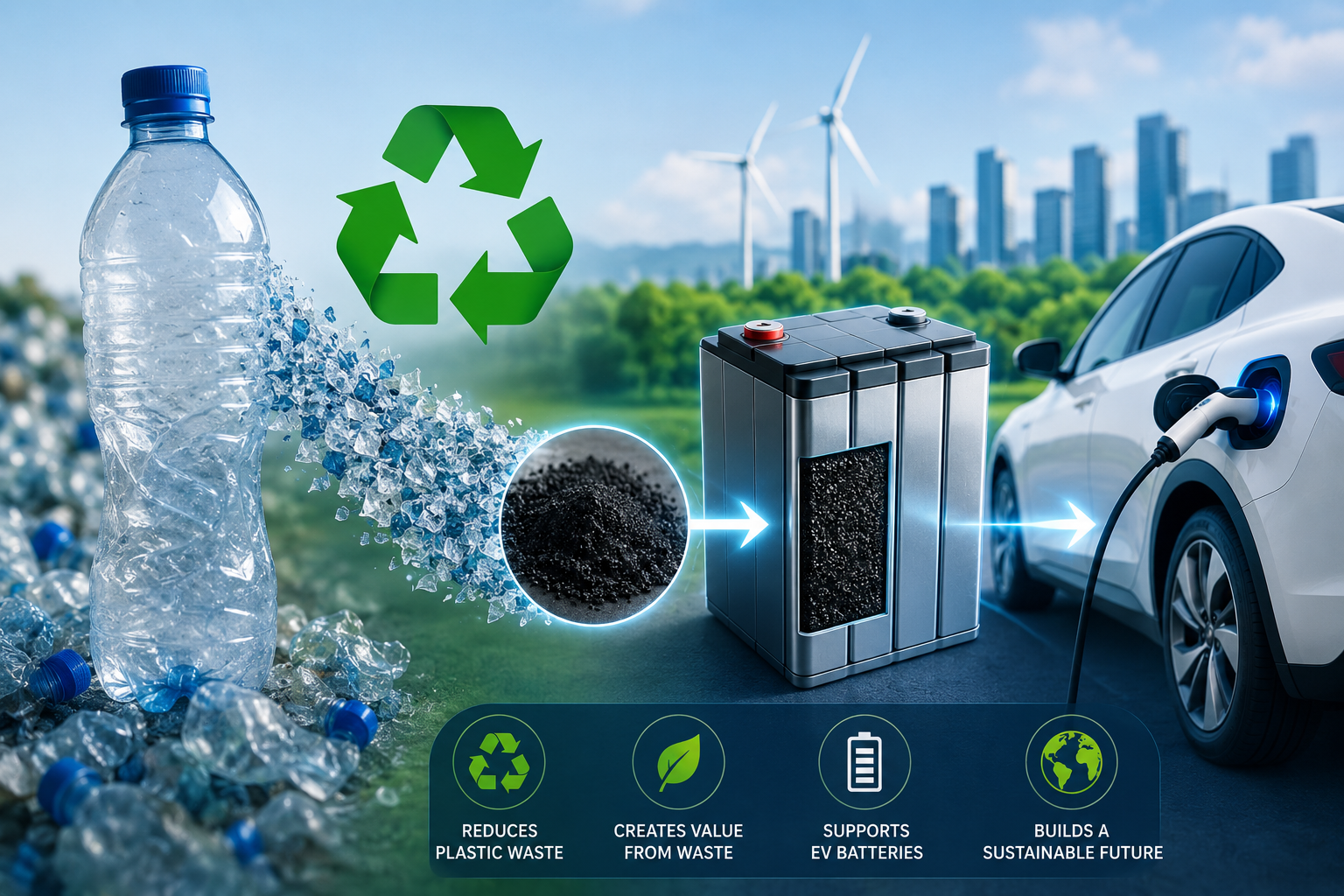
Researchers have developed an innovative process that converts discarded PET plastic bottles into battery-grade synthetic graphite, a key material used in lithium-ion batteries. If successfully commercialized, this breakthrough could reduce plastic waste while supporting the growing demand for electric vehicles (EVs) and energy storage systems.
Why This Discovery Is Important
Plastic bottles are one of the most common types of plastic waste generated worldwide. Although recycling rates have improved, millions of bottles still end up in landfills or pollute the environment.
This new technology demonstrates that waste PET plastic can be transformed into a valuable industrial raw material rather than simply being discarded.
What Is Battery-Grade Graphite?
Graphite is one of the most important materials used inside lithium-ion batteries. It forms the battery’s anode and is found in:
- Electric Vehicles (EVs)
- Smartphones
- Laptops
- Power Banks
- Energy Storage Systems
As EV production increases worldwide, demand for high-quality graphite continues to rise.
How Plastic Bottles Are Converted
Scientists used waste PET bottles and applied a carefully controlled heating process along with advanced carbon engineering techniques. The process rearranges the carbon atoms inside the plastic, producing highly ordered synthetic graphite suitable for battery applications.
Unlike traditional manufacturing methods, this approach reduces the need for certain metal catalysts that may introduce impurities during production.
Potential Benefits
- Reduces plastic waste entering landfills.
- Creates high-value products from recycled plastics.
- Supports electric vehicle manufacturing.
- Reduces dependence on mined graphite.
- Promotes a circular economy.
- Encourages sustainable industrial development.
What It Means for India
India is one of the world’s largest consumers of plastic packaging and is also rapidly expanding its electric vehicle market.
If technologies like this become commercially viable, they could create new opportunities for:
- Plastic recycling companies
- Plastic scrap traders
- Recycled plastic manufacturers
- Battery manufacturers
- Sustainable material suppliers
Such innovations could increase the value of waste plastic and encourage greater investment in recycling infrastructure.
Challenges Before Commercial Use
Although laboratory results are promising, researchers still need to prove that the technology can be scaled economically for industrial production.
Future work will focus on manufacturing costs, production efficiency, battery performance, and commercial feasibility.
BG Enterprise’s Perspective
Innovations like this demonstrate how plastic waste can become a valuable industrial resource instead of an environmental burden. As the recycling industry evolves, businesses involved in plastic collection, processing, and recycled raw materials will play an increasingly important role in supporting sustainable manufacturing.
Conclusion
Turning discarded plastic bottles into battery-grade graphite represents an exciting advancement in recycling technology. While the process is still under development, it highlights the growing importance of innovation in transforming waste into valuable resources for the clean energy economy.
Frequently Asked Questions (FAQ)
Can plastic bottles really be used to make EV batteries?
Researchers have successfully demonstrated a laboratory process that converts PET plastic bottles into battery-grade synthetic graphite used in lithium-ion batteries.
Which type of plastic is used?
The process focuses on PET (Polyethylene Terephthalate), the material commonly used for beverage bottles.
Is this technology commercially available?
Not yet. The research is still in the development stage and requires further testing before large-scale production.
Why is graphite important?
Graphite is a critical material used in the anode of lithium-ion batteries, enabling efficient energy storage for electric vehicles and electronic devices.