
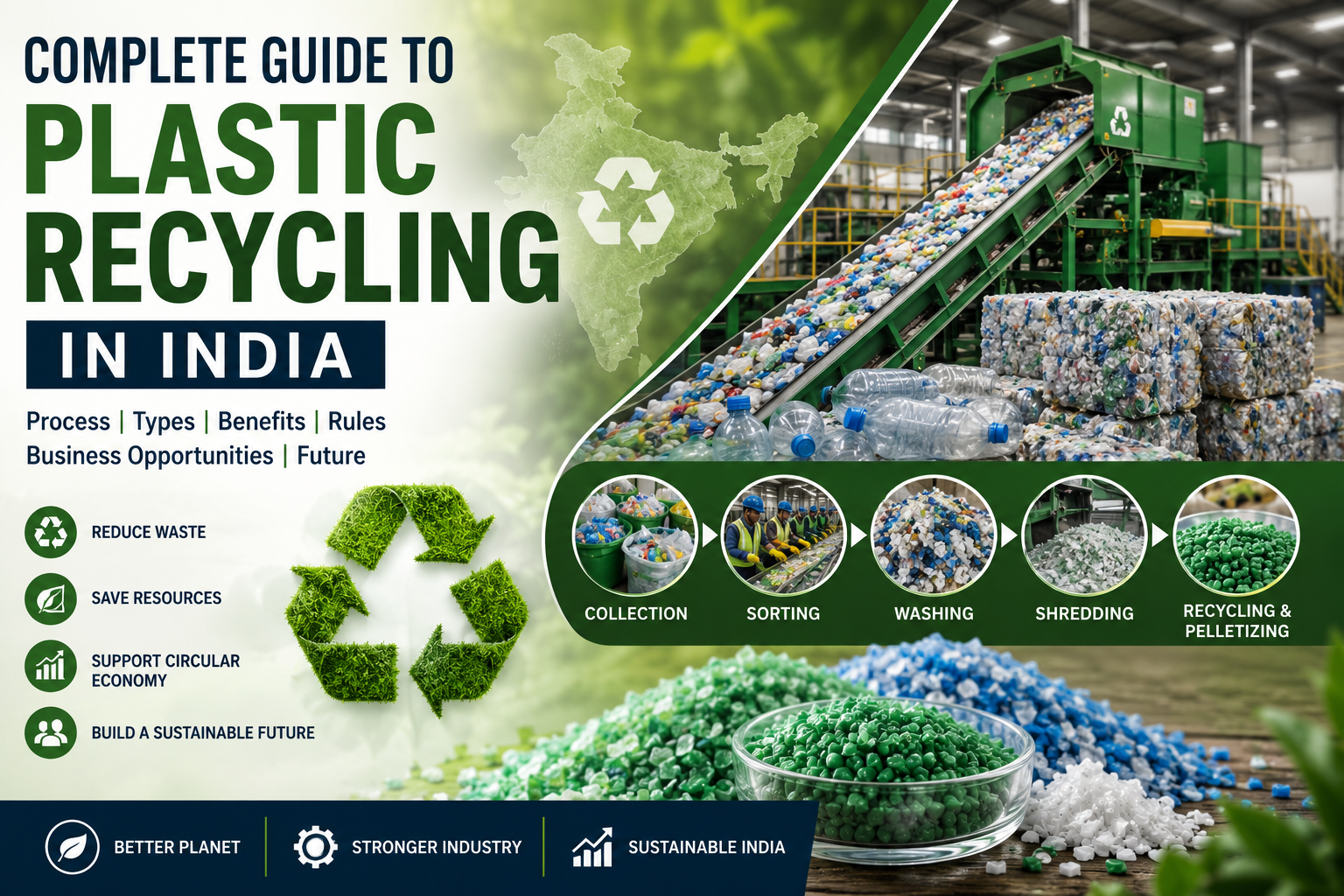
Complete Guide to Plastic Recycling in India
Plastic has become an essential material in modern life because it is lightweight, durable, affordable, and highly versatile. It is used in packaging, construction, agriculture, healthcare, electronics, automobiles, and countless everyday products. However, the growing use of plastic has also created a significant challenge—plastic waste management.
Plastic recycling plays a crucial role in reducing environmental pollution, conserving natural resources, and supporting a circular economy. In India, recycling has become an important industry that creates employment opportunities while reducing the amount of plastic waste sent to landfills.
What is Plastic Recycling?
Plastic recycling is the process of collecting, sorting, cleaning, processing, and converting discarded plastic materials into reusable raw materials or new products. Instead of treating plastic as waste, recycling gives it a second life and reduces the need for virgin plastic production.
Why Plastic Recycling is Important
- Reduces plastic pollution
- Conserves natural resources
- Saves energy during manufacturing
- Reduces greenhouse gas emissions
- Supports a circular economy
- Creates employment opportunities
- Reduces landfill waste
- Promotes sustainable manufacturing
Common Types of Recyclable Plastics
| Plastic Type | Common Uses | Recyclability |
|---|---|---|
| PET (1) | Water bottles, beverage containers | Excellent |
| HDPE (2) | Milk bottles, detergent containers, pipes | Excellent |
| PVC (3) | Pipes, cables, construction materials | Limited |
| LDPE (4) | Plastic bags, films, packaging | Good |
| PP (5) | Buckets, furniture, automotive parts | Excellent |
| PS (6) | Disposable cups, foam packaging | Limited |
Plastic Recycling Process
1. Collection
Plastic waste is collected from households, industries, commercial establishments, agricultural sectors, and municipal waste collection systems.
2. Sorting
Collected plastics are sorted according to resin type, color, and quality to ensure efficient recycling.
3. Washing
Plastic waste is thoroughly cleaned to remove dirt, labels, food residue, adhesives, oils, and other contaminants.
4. Shredding
The cleaned plastic is shredded into small flakes that are easier to process.
5. Drying
After washing, the plastic flakes are dried to remove moisture before further processing.
6. Extrusion & Pelletizing
The dried flakes are melted and converted into plastic granules or pellets, which can be used to manufacture new products.
Applications of Recycled Plastic
- Plastic furniture
- Pipes and fittings
- Packaging materials
- Automotive components
- Construction products
- Garden products
- Industrial containers
- Agricultural products
Government Initiatives in India
India has introduced various regulations to improve plastic waste management, encourage recycling, and promote responsible disposal practices. Extended Producer Responsibility (EPR), Plastic Waste Management Rules, and awareness campaigns encourage manufacturers and producers to participate in sustainable waste management.
Challenges Facing Plastic Recycling
- Mixed plastic waste
- Contamination
- Limited collection infrastructure
- Fluctuating recycled material prices
- Lack of consumer awareness
- Difficulty recycling multi-layer packaging
Future of Plastic Recycling in India
India’s recycling industry is expected to grow significantly due to increasing environmental awareness, improved recycling technologies, stronger regulations, and rising demand for recycled plastic materials. Investments in modern recycling plants, automation, and sustainable manufacturing practices are likely to strengthen the country’s circular economy.
Frequently Asked Questions
Can all plastics be recycled?
No. While many common plastics such as PET, HDPE, LDPE, and PP are widely recyclable, some plastics are more difficult to recycle because of their composition or contamination.
Why is plastic sorting important?
Proper sorting improves recycling quality, reduces contamination, and increases the value of recycled plastic materials.
What products are made from recycled plastic?
Recycled plastic is commonly used to manufacture pipes, containers, packaging materials, furniture, construction products, automotive components, and many other industrial and consumer products.
Final Thoughts
Plastic recycling is one of the most effective ways to reduce environmental pollution while conserving valuable resources. As recycling technologies continue to improve and sustainable practices become increasingly important, India has significant opportunities to strengthen its recycling ecosystem and support long-term environmental and economic growth. Every individual, business, and industry has an important role to play in creating a cleaner and more sustainable future through responsible plastic waste management.

