
Recove Ventures Plans ₹500 Crore Investment to Expand Plastic Recycling in Maharashtra
Recove Ventures Plans ₹500 Crore Investment to Expand Plastic Recycling in Maharashtra
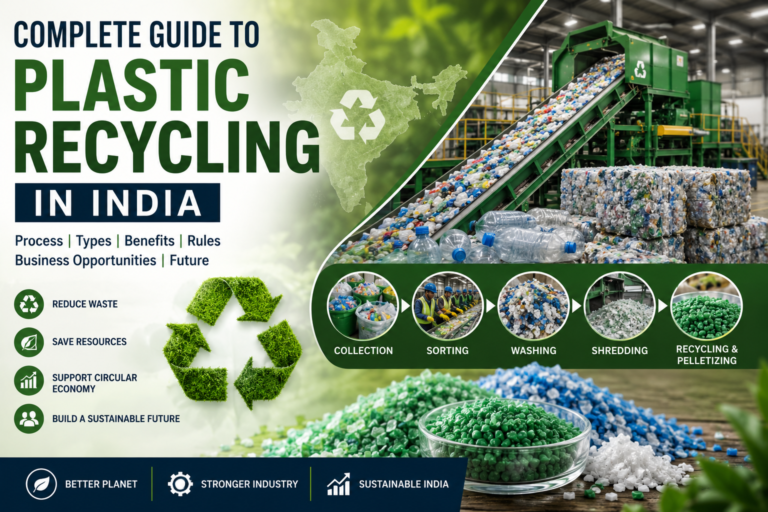
India’s plastic recycling industry is attracting major investment as demand for recycled materials and circular manufacturing continues to grow. One of the latest developments comes from Recove Ventures, which has signed a 10-year Memorandum of Understanding (MoU) with the Government of Maharashtra to develop a large-scale plastic recycling and circular manufacturing ecosystem in the state.
Under the agreement, Recove Ventures plans to invest more than ₹500 crore over the next decade across plastic waste processing, recycling, material recovery, aggregation, and related circular manufacturing activities. The initiative could become an important development for India’s organised plastic recycling sector.
What is Recove Ventures Planning?
Recove Ventures is a B2B circular economy company focused on building supply-chain and recycling infrastructure for India’s plastic industry. Instead of focusing on a single recycling plant, the company plans to develop a broader network covering waste collection, pre-processing, recycling, material recovery, and the supply of recycled raw materials.
According to the company’s announcement, the first phase of the Maharashtra initiative is planned to create capacity to process around 5,000 tonnes of plastic waste per month, with the network expected to expand further as the company enters additional recyclable material streams.
First Project: HDPE and PP Recycling Plant in Jalgaon
The first major investment under the Maharashtra agreement is an advanced HDPE and PP recycling facility at Additional Jalgaon MIDC in Jalgaon district.
The project represents an investment of more than ₹35 crore and is planned with an installed processing capacity of approximately 1,100 tonnes per month. Commissioning is targeted between October and December 2026.
The facility is expected to use extrusion and granulation technologies along with deep-vacuum deodorisation to produce industrial-grade recycled plastic granules. These materials are intended for applications including packaging, automotive components, and consumer products.
Why HDPE and PP Recycling Matters
HDPE and PP are among the most widely used plastics in packaging, household products, automotive applications, containers, and industrial products. However, recovering these materials from post-consumer waste at consistent quality and scale remains a challenge.
A stronger recycling infrastructure for HDPE and PP can help convert discarded plastic into useful secondary raw materials instead of sending it to landfills or losing it from the formal recycling chain.
For manufacturers, reliable supplies of quality recycled granules can also create opportunities to increase recycled content in products while reducing dependence on virgin polymers where technically and commercially suitable.
From Plastic Waste to Industrial Raw Material
The larger significance of the Recove project is its focus on creating an organised supply chain around plastic recycling.
A successful recycling system requires much more than a recycling machine. Waste needs to be collected, segregated, aggregated, transported, processed, cleaned, and converted into material that manufacturers can consistently use.
By investing across multiple stages of this chain, organised recycling companies can potentially improve traceability, material quality, and supply reliability.
Expected Employment and Industrial Impact
The Jalgaon facility is expected to create around 100 direct jobs and more than 1,500 indirect employment opportunities, according to the reported project plans.
Beyond employment, the development could support businesses involved in plastic collection, transportation, sorting, pre-processing, machinery, maintenance, recycling, testing, and manufacturing using recycled polymers.
Maharashtra’s Growing Circular Economy Push
The Recove investment comes as Maharashtra is increasing its focus on circular economy infrastructure. The state has a large industrial base and an established recycling ecosystem, creating opportunities for investment in waste processing and resource recovery.
The Maharashtra government is also expected to support the project through measures including consideration of land allotment in MIDC areas and future Circular Economy Parks, single-window assistance for statutory clearances, and consideration of applicable incentives under existing industrial policies.
What This Could Mean for India’s Recycling Industry
Large investments such as this can be important for India’s plastic recycling industry because they demonstrate a shift from small-scale and fragmented recycling operations toward larger, organised infrastructure.
For the industry to grow sustainably, however, investment in processing capacity needs to be matched by dependable waste collection, effective segregation, consistent feedstock quality, skilled manpower, suitable technology, and stable demand for recycled polymers.
If these parts of the ecosystem develop together, India could increase the amount of plastic waste that is recovered and converted into commercially useful materials.
Opportunities for Plastic Recycling Businesses
The expansion of organised recycling infrastructure could create opportunities for businesses across the plastic waste value chain.
- Plastic waste collection and aggregation
- Sorting and pre-processing facilities
- HDPE and PP recycling
- Plastic washing and shredding
- Recycled plastic granule production
- Material testing and quality control
- Recycling machinery and equipment
- Transportation and logistics
- Manufacturing using recycled polymers
For smaller recyclers and material suppliers, the growth of larger recycling networks could also create opportunities to become part of more organised supply chains.
What to Watch Next
The next important milestones will be the development of the Jalgaon facility, the company’s expansion of processing capacity, and the establishment of additional recycling and material-recovery infrastructure under the 10-year framework.
The success of these projects will depend not only on installed capacity but also on the quality of recovered material, operational efficiency, reliable feedstock supply, and demand from manufacturers for recycled polymers.
Final Thoughts
Recove Ventures’ planned investment of more than ₹500 crore represents a significant development for India’s plastic recycling industry. The combination of large-scale investment, HDPE and PP recycling capacity, and government support could help strengthen Maharashtra’s circular manufacturing ecosystem.
The more important question now is how effectively this investment can connect plastic waste collection with high-quality recycled material production. If the planned infrastructure achieves that goal, it could provide a useful model for scaling organised plastic recycling in other industrial regions of India.